
Mitla Ruins: Guide to Oaxaca's City of the Dead
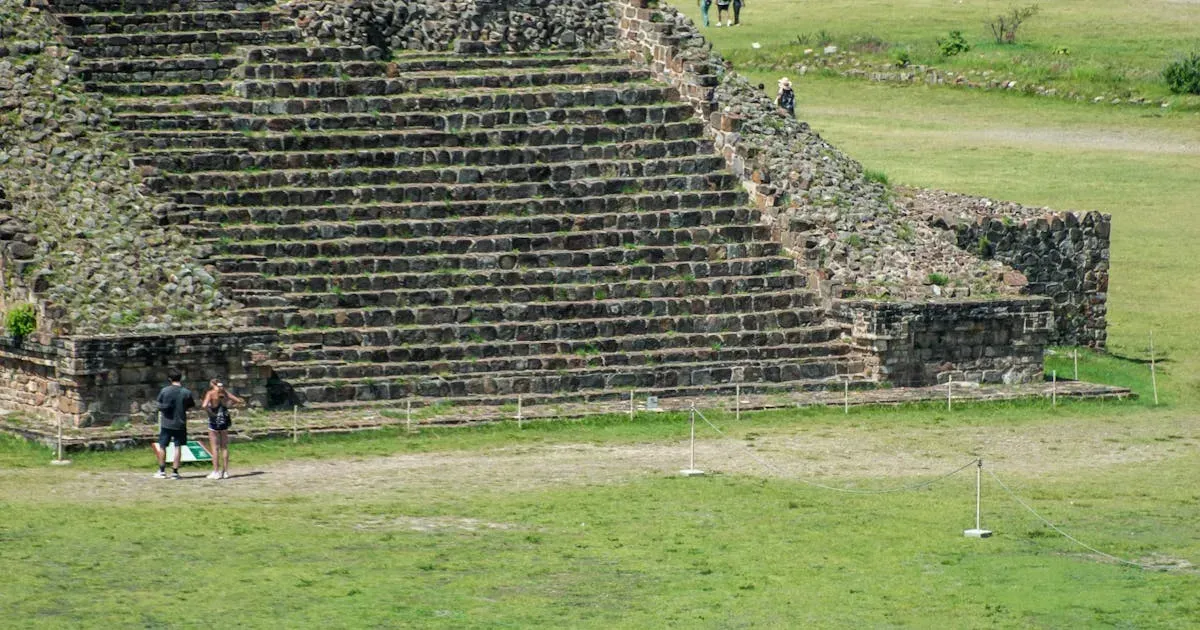
Mitla is the second most important archaeological site in Oaxaca, and in many ways it is the more remarkable one. While Monte Alban impresses with scale and panoramic drama, Mitla astonishes with detail. Its geometric stone mosaics — called grecas — are among the most intricate and technically accomplished architectural decorations ever created in pre-Hispanic Mesoamerica. No mortar holds them together. No two panels are identical. Each piece was individually cut and fitted with a precision that continues to puzzle archaeologists.
The name Mitla comes from the Nahuatl word “Mictlan,” meaning “Place of the Dead” or “Underworld.” The Zapotecs knew it as “Lyobaa,” meaning “Place of Rest.” This was not a political capital like Monte Alban. It was a spiritual one — a ceremonial center where Zapotec high priests lived, performed rituals, and where the rulers of the Zapotec world were buried. To visit Mitla is to walk through Oaxaca’s most sacred ancient ground.
This guide covers everything you need to know to plan your visit, from the site’s layered history to the logistics of getting there and combining it with other stops along the Tlacolula Valley.
A Brief History of Mitla
Early Origins (100 BCE - 750 CE)
Archaeological evidence suggests that Mitla was first settled around 100 BCE, during the period when Monte Alban was at the height of its power. For centuries, Mitla served as a secondary settlement in the Tlacolula Valley, overshadowed by the great hilltop capital to the west. Early construction at the site was modest — simple platforms and residential structures that gave little indication of what was to come.
During this period, Monte Alban controlled the political and religious life of the Oaxaca Valley. Mitla’s role was likely that of a regional center, important enough to receive attention from the Zapotec state but not yet the spiritual powerhouse it would become.
Rise to Prominence (750 - 1000 CE)
As Monte Alban declined after 700 CE, power in the Oaxaca Valley became decentralized. Several cities rose to fill the vacuum, and Mitla was one of the most important. By 750 CE, Mitla had become the primary religious center of the Zapotec world and the residence of the Uija-tào, the supreme Zapotec high priest.
Spanish colonial sources describe the Uija-tào as a figure of immense authority, consulted by kings and warriors before major decisions. He lived in Mitla’s palace complexes and presided over elaborate funeral rites. According to these accounts, the rulers of the Zapotec kingdoms were brought to Mitla for burial, descending into underground chambers that were believed to connect with the underworld.
It was during this period that the famous geometric mosaics were created. The architecture of Mitla shifted from functional to extraordinary, with every available surface covered in intricate stone fretwork.
Mixtec Influence and the Spanish Conquest (1000 - 1553 CE)
Beginning around 1000 CE, the Mixtec people expanded into the Oaxaca Valley through military conquest and strategic marriage alliances with Zapotec ruling families. Mitla shows evidence of both Zapotec and Mixtec cultural influence during this transitional period. The site’s painted tombs, with their geometric designs in red, white, and black, reflect a blending of the two artistic traditions.
When the Spanish arrived in the 1520s, Mitla was still an active ceremonial center. The Spanish recognized the threat it posed to their conversion efforts and deliberately built a church — the Iglesia de San Pablo — directly on top of one of the site’s platforms, using stones from the ancient structures. The church still stands today, a striking visual reminder of the collision between two civilizations.
The Grecas: Mitla’s Masterpiece
The geometric stone mosaics at Mitla are unique in Mesoamerica. Nothing comparable exists at any other archaeological site in the Americas. Here is what makes them extraordinary:
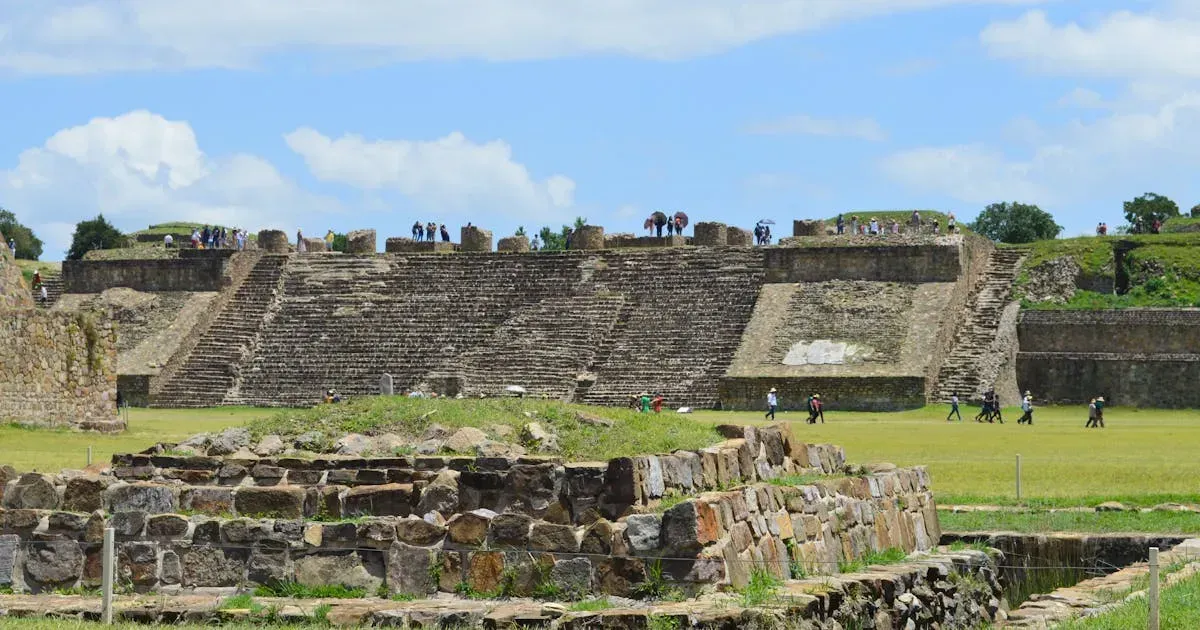
Construction Without Mortar
Each mosaic panel is composed of thousands of small, individually cut pieces of trachyte stone, fitted together without any adhesive or mortar. The pieces interlock through precision cutting alone. Run your hand along the wall (where permitted) and you will feel the seamless joints. After more than a thousand years, many of these panels remain perfectly intact.
Geometric Complexity
The designs are based on stepped fret patterns (called “grecas” in Spanish) that repeat and interlock in complex variations. Scholars have identified at least 14 distinct geometric patterns across the site. The designs are believed to represent cosmological concepts: the sky, the earth, the feathered serpent (Quetzalcoatl), and the passage between the world of the living and the world of the dead.
Scale
The mosaics are not small decorative accents. They cover entire walls, door lintels, and building facades. The Hall of the Columns alone contains panels estimated to include over 100,000 individual stone pieces. This represents an almost unimaginable investment of skilled labor, underscoring Mitla’s importance as the spiritual center of the Zapotec world.
How They Were Made
Archaeological analysis suggests that craftsmen first carved the designs as monolithic panels, then — in later phases — switched to the mosaic technique of individually cut and fitted pieces. This evolution likely reflected both technological advancement and a desire for greater decorative complexity. The stone was quarried locally and shaped using obsidian and harder stone tools, as the Zapotecs did not use metal tools.
What to See at Mitla
Mitla’s archaeological zone is divided into five groups of structures, though only two are fully accessible to visitors:
The Group of the Columns
This is the main attraction and the most elaborately decorated area of the site. The central courtyard is surrounded by buildings whose exterior and interior walls are covered in geometric mosaics. The Hall of the Columns — a long, narrow chamber with six massive monolithic columns — is the largest and most impressive room at Mitla.
Step inside the Hall of the Columns and look at the walls: every surface is covered in interlocking geometric patterns. The columns once supported a roof, and the room served as a gathering place for religious ceremonies. The scale of the mosaics is best appreciated here, where the patterns extend from floor level to well above head height.
Behind the Hall of the Columns, a narrow passage leads to smaller interior rooms with some of the best-preserved mosaics at the site. These intimate chambers were likely where the high priest conducted private rituals.
Do not miss: The north tomb, accessible via a narrow stairway beneath one of the buildings. This underground chamber features painted walls and a cruciform floor plan. According to local tradition, one of the columns inside the tomb will tell you how many years you have left to live — you embrace the column and measure the gap between your hands.
The Group of the Church
Adjacent to the Group of the Columns, this area is dominated by the colonial-era Iglesia de San Pablo, built directly on a pre-Hispanic platform. The juxtaposition is fascinating: ancient Zapotec mosaics visible on the platform walls, topped by a Catholic church constructed from the very same stones.
The buildings around this courtyard also feature impressive mosaic panels, and because this area attracts fewer visitors than the Group of the Columns, you may have more time to examine the stonework closely.
The Adobe Group and Other Structures
Farther from the main entrance, these less-visited groups contain structures built with a combination of stone and adobe. While less dramatically decorated, they provide context for understanding the full extent of the ancient city. Most visitors focus on the two groups described above, but if you have time, exploring these outer areas gives a sense of Mitla’s original scale.
The Site Museum
A small museum near the entrance displays artifacts found at Mitla, including ceramics, carved stones, and reproductions of the geometric patterns with explanations of their possible meanings. It is worth spending 15-20 minutes here before entering the ruins, as the context will enrich your visit.
How to Get to Mitla
Mitla is located approximately 44 kilometers (27 miles) southeast of Oaxaca City, in the Tlacolula Valley. The drive takes about 45-60 minutes depending on traffic.
Colectivo (Shared Van)
The most affordable option. Colectivos to Mitla depart from the second-class bus terminal (Central de Abastos) in Oaxaca City. The fare is approximately 30-40 MXN ($1.70-2.20 USD) per person, and the journey takes about an hour with stops. Tell the driver you are going to “las ruinas” so they drop you at the archaeological zone rather than the town center.
Return colectivos can be flagged down on the main road outside the site. Service runs roughly every 15-20 minutes until early evening.
Taxi or Rideshare
A private taxi from Oaxaca City to Mitla costs approximately 400-600 MXN ($22-33 USD) one way. Negotiate the price before departure, or better yet, negotiate a round-trip fare with waiting time. Uber and DiDi work for the outbound trip but finding a return ride from Mitla can be difficult.
Rental Car
Driving to Mitla is straightforward. Take Highway 190 east toward Tlacolula, then follow signs south to Mitla. The road is paved and well-maintained. Free parking is available near the site entrance. Having your own car is especially convenient if you plan to combine Mitla with other stops (see the combining section below).
Organized Tour
Most “Mitla and the Tlacolula Valley” tours include stops at the Tule Tree, a mezcal distillery, the Tlacolula market (Sundays only), Mitla, and sometimes Hierve el Agua. Full-day tours typically cost 400-800 MXN ($22-44 USD) per person including transport. The guide commentary at Mitla is particularly valuable, as the site’s minimal signage makes it easy to walk past extraordinary details without noticing them.
Practical Information
Hours
Mitla is open daily from 8:00 AM to 5:00 PM (last entry at 4:30 PM). The site rarely closes except for exceptional circumstances.
Admission
- General admission: 90 MXN (approximately $5 USD)
- Free admission on Sundays for Mexican nationals and permanent residents
- Video camera permit: An additional 45 MXN ($2.50 USD) for professional video equipment. Standard phones and cameras are included in general admission.
Guided Tours at the Site
Local guides are available at the entrance, offering tours in Spanish and English. A guided tour of approximately 1-1.5 hours costs 300-500 MXN ($16-27 USD) for a small group. As with Monte Alban, sharing a guide with other visitors is a smart way to reduce costs.
A guide at Mitla is even more important than at Monte Alban. The geometric patterns, burial chambers, and historical context are not self-explanatory, and the site has very little interpretive signage.
Combining Mitla with Other Attractions
One of the great advantages of visiting Mitla is its location along the Tlacolula Valley corridor, which contains several other major attractions. A well-planned day trip can include multiple stops:
The Tule Tree (El Arbol del Tule)
Located just 12 kilometers (7.5 miles) east of Oaxaca City, the Tule Tree is the first stop on the route to Mitla. This Montezuma cypress (ahuehuete) is one of the thickest trees in the world, with a trunk circumference of approximately 42 meters (138 feet) and an estimated age of 1,500 to 2,000 years. The tree stands in the churchyard of Santa Maria del Tule and can be visited in 20-30 minutes. Admission is 10 MXN ($0.55 USD).
Tlacolula Market (Sundays Only)
If you are visiting on a Sunday, the Tlacolula market is one of the most authentic indigenous markets in Oaxaca. Located about 31 kilometers (19 miles) from the city, this sprawling weekly market has operated for centuries and is where local Zapotec communities come to trade produce, meats, mezcal, textiles, and household goods. It is a feast for the senses and an excellent place to try barbacoa de borrego (pit-roasted lamb) and fresh tepache. Plan for at least an hour.
Mezcal Distilleries
Several traditional mezcal palenques (distilleries) are located along the road between Tlacolula and Mitla, part of the broader day trip route from Oaxaca. Most welcome visitors for free tastings and tours of their production process. The village of Santiago Matatlan, about 10 kilometers (6 miles) past Mitla, calls itself the “world capital of mezcal” and has numerous palenques to visit.
Hierve el Agua
The petrified waterfalls of Hierve el Agua are located approximately 25 kilometers (15.5 miles) beyond Mitla on a winding mountain road. Combining Mitla and Hierve el Agua in a single day is very common and highly recommended, though it makes for a full day (leave Oaxaca City by 8:00 AM). If driving yourself, note that the road from Mitla to Hierve el Agua is paved but steep and winding, with some sections requiring careful driving.
Suggested Day Itinerary
For a full Tlacolula Valley day, consider this route:
- 8:00 AM — Depart Oaxaca City
- 8:30 AM — Tule Tree (20-30 minutes)
- 9:15 AM — Tlacolula Market (Sundays) or mezcal tasting (other days) (45-60 minutes)
- 10:30 AM — Mitla archaeological zone (1.5-2 hours)
- 1:00 PM — Lunch in Mitla town (try the local quesillo and empanadas at the market)
- 2:00 PM — Drive to Hierve el Agua (45 minutes)
- 2:45 PM — Hierve el Agua (2 hours for pools and hiking)
- 5:00 PM — Return to Oaxaca City (1.5-2 hours)
Best Time to Visit
Time of Day
Arrive early in the morning when the light hits the mosaics at lower angles, creating dramatic shadows that reveal the depth and texture of the carvings. By midday, the overhead sun flattens the visual effect. The site is also quieter before 10:00 AM, when the tour buses begin arriving.
Time of Year
- Dry season (October-April): Clear skies and comfortable temperatures. Best for photography.
- Rainy season (May-September): Mornings are usually dry, with afternoon showers. The surrounding landscape is lush green, creating beautiful contrast with the stone ruins.
- Sunday visits: If you can time your visit for a Sunday, you get free admission (for Mexican residents) and the option to stop at the Tlacolula market on the way.
Essential Tips for Your Visit
What to Bring
- Sunscreen and a hat: The courtyards at Mitla have limited shade, and you will spend most of your time in direct sunlight.
- Water: Bring at least 1 liter (34 oz) per person. There are small shops near the entrance, but prices are marked up.
- Comfortable walking shoes: The terrain is mostly flat but includes some uneven stone surfaces and narrow stairways in the tombs.
- A flashlight or phone light: Useful for examining the tomb interiors, which are dimly lit.
- Cash: For entrance fees, guide tips, and purchases at the artisan market outside the site. Cards are not widely accepted.
What Not to Do
- Do not touch the mosaics unless your guide specifically indicates it is permitted. The oils from human hands degrade the stone over time.
- Do not climb on the structures. Stay on designated paths and stairways.
- Do not remove anything. Taking stones, pottery fragments, or any material from the site is illegal under Mexican law.
- Do not skip the artisan market. The covered market outside the archaeological zone sells textiles, pottery, and mezcal from local producers. It is a good place to purchase authentic Oaxacan crafts at reasonable prices, and your purchases directly support the community.
How Much Time to Allow
Plan for 1.5-2 hours at the archaeological zone itself, including the museum. If you hire a guide, allow closer to 2 hours. If you plan to explore the artisan market and grab food in town, add another 30-60 minutes.
Mitla vs. Monte Alban: Which Should You Visit?
The honest answer is both. They are fundamentally different experiences:
Monte Alban offers grand scale, panoramic views, and the drama of a hilltop city. It is the better choice if you only have time for one site and want the most visually impressive archaeological experience in Oaxaca.
Mitla offers intimate detail, unparalleled craftsmanship, and a deeper connection to the spiritual life of the Zapotec world. It rewards close looking and quiet contemplation more than Monte Alban, and it is easier to combine with other attractions in the Tlacolula Valley.
If you have two or more days in Oaxaca, visiting both is highly recommended. Monte Alban works well as a morning half-day trip, while Mitla fits best into a full-day Tlacolula Valley excursion.
The Significance of Mitla
Mitla represents something unusual in the ancient Americas: a city whose power was primarily spiritual rather than military or political. While Monte Alban was a seat of government, Mitla was a seat of faith. The extraordinary investment in its architecture — those tens of thousands of individually cut stone pieces — was not meant to impress armies or rival kings. It was meant to honor the dead and to bridge the gap between the living and the underworld.
Walking through Mitla’s mosaic-covered courtyards, you are experiencing one of the most refined artistic achievements of pre-Hispanic civilization. The patterns that cover these walls are not decoration for its own sake. They are a visual language, expressing concepts about the cosmos, the cycles of life and death, and the connection between the human world and the divine.
For more on the civilizations that shaped this region, read about the Zapotec culture, gods, and civilization. You can also visit the Oaxaca museums in the city to see artifacts from Mitla on display.
In a single visit, Mitla can shift your understanding of what indigenous Mesoamerican cultures were capable of. This was not a simple or primitive society. This was a civilization that invested extraordinary skill, patience, and vision in creating buildings that would speak across millennia. Standing in the Hall of the Columns, surrounded by those silent, perfect patterns, you begin to hear what they are saying.