
10 Best Museums in Oaxaca City (2026 Guide)
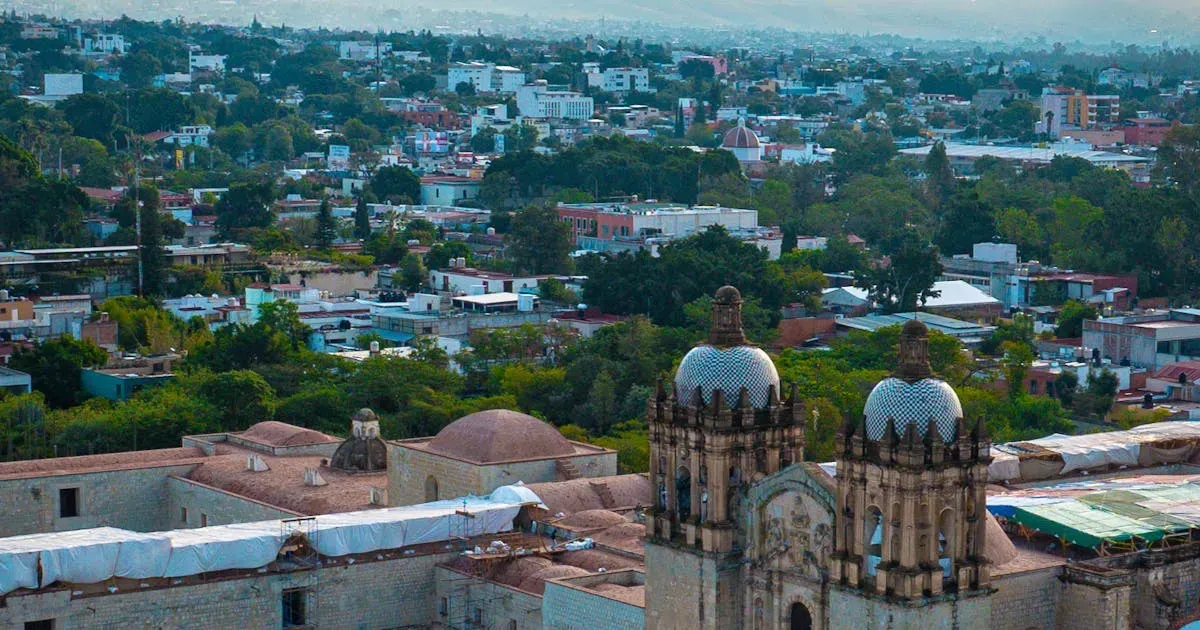
Oaxaca City packs more cultural depth per square block than almost any city in the Americas. Within its compact, walkable Centro Histórico, you will find museums covering pre-Hispanic civilizations, colonial-era art, contemporary painting, indigenous textiles, philatelic history, and the personal stories of national heroes. The best part is that several of Oaxaca’s finest museums are free, and even the paid ones rarely cost more than a few dollars.
This guide covers the 10 best museums in Oaxaca, with practical details on hours, admission, what to expect, and how to build a museum itinerary that fits your schedule and interests.
1. Museo de las Culturas de Oaxaca (Museum of Oaxacan Cultures)
Location: Inside the Ex-Convento de Santo Domingo de Guzmán, Macedonio Alcalá s/n, Centro
Hours: Tuesday to Sunday, 10:00 AM - 6:15 PM. Closed Mondays.
Admission: 90 MXN ($5 USD). Free on Sundays for Mexican nationals and residents.
Time needed: 1.5 - 2.5 hours
This is the museum you should not miss under any circumstances. Housed inside the magnificently restored 16th-century Dominican convent adjacent to the Templo de Santo Domingo de Guzmán, the Museum of Oaxacan Cultures is one of the finest regional museums in all of Mexico.
The collection spans Oaxaca’s entire history, from the earliest human settlements through the pre-Hispanic Zapotec and Mixtec civilizations, the Spanish conquest, the colonial period, and the modern era. The exhibits are arranged chronologically across 14 halls on two floors of the former convent.
The Tomb 7 Treasures
The museum’s crown jewel is the Tomb 7 collection, displayed in its own dedicated hall. In 1932, archaeologist Alfonso Caso excavated Tomb 7 at Monte Albán and discovered one of the richest archaeological finds in the Americas — over 400 objects of gold, silver, turquoise, jade, obsidian, coral, and carved bone. The Mixtec gold pectoral (chest ornament) depicting the god of death is breathtaking in its detail and craftsmanship.
Standing before these objects — some over 700 years old, created with techniques that goldsmiths still cannot fully replicate — is one of those travel moments that stays with you.
Tips
- Visit in the morning when the light fills the convent’s stone corridors beautifully.
- Combine your museum visit with the Templo de Santo Domingo (free entry) and the Jardín Etnobotánico (guided tours available at set times, 100 MXN / $5 USD).
- Audio guides are available in English and Spanish for 50 MXN ($3 USD).
- The convent building itself is worth the admission price — the architecture, restored frescoes, and courtyard views are magnificent.
2. Museo Textil de Oaxaca (Textile Museum of Oaxaca)
Location: Hidalgo 917, Centro (inside a restored 18th-century house)
Hours: Monday to Saturday, 10:00 AM - 8:00 PM. Sunday, 10:00 AM - 6:00 PM.
Admission: Free
Time needed: 45 minutes - 1.5 hours
The Textile Museum is one of Oaxaca’s hidden gems and arguably the best free museum in the city. Founded by the Alfredo Harp Helú Foundation, it is dedicated to preserving, studying, and exhibiting textile traditions from Oaxaca, Mexico, and the world.
The museum occupies a beautifully restored colonial-era house with thick stone walls, tiled floors, and interior courtyards. Exhibitions rotate every few months, but typically include:
- Historical textiles from Oaxaca’s indigenous communities, including rare huipiles, rebozos, and ceremonial garments — learn more in our guide to traditional clothing of Oaxaca
- Demonstrations of natural dyeing techniques (cochineal, indigo, caracol purple)
- Contemporary textile art by Mexican and international artists
- Thematic shows exploring the relationship between textiles, identity, and social change
The museum shop sells high-quality textiles, books, and craft supplies at fair prices. The library on the second floor is open to researchers and the general public.
Tips
- Check the museum’s website or social media for current exhibition information — the rotating shows are consistently excellent.
- The building’s architecture alone is worth a visit. The central courtyard is one of the most peaceful spots in the city center.
- Free guided tours are sometimes available — ask at the front desk.
3. Museo de Arte Contemporáneo de Oaxaca (MACO)
Location: Macedonio Alcalá 202, Centro (inside the Casa de Cortés)
Hours: Monday and Wednesday to Saturday, 10:30 AM - 8:00 PM. Sunday, 10:30 AM - 6:00 PM. Closed Tuesdays.
Admission: 30 MXN ($2 USD). Free on Sundays.
Time needed: 45 minutes - 1.5 hours
MACO occupies the Casa de Cortés, a colonial building from the late 17th century, and focuses on contemporary art with a strong Oaxacan and Mexican perspective. The museum was inaugurated in 1992 and has become one of the most important contemporary art spaces in southern Mexico.
The permanent collection includes works by major Oaxacan artists like Francisco Toledo, Rodolfo Morales, and Rufino Tamayo, alongside rotating exhibitions of contemporary Mexican and international art. Toledo, who was instrumental in the museum’s founding and in the broader cultural renaissance of Oaxaca, is represented with particular depth.
The museum regularly hosts installations, photography exhibitions, experimental art, and shows that engage with social and political themes relevant to Oaxaca and Mexico.
Tips
- The building’s colonial architecture provides an interesting dialogue with the contemporary art inside.
- MACO is located directly on the Andador Turístico (pedestrian street), making it easy to incorporate into a walking tour of the center.
- The ground-floor courtyard often has site-specific installations that change seasonally.
4. Museo de Arte Prehispánico de México Rufino Tamayo
Location: Morelos 503, Centro
Hours: Monday and Wednesday to Saturday, 10:00 AM - 7:00 PM. Sunday, 10:00 AM - 3:00 PM. Closed Tuesdays.
Admission: 50 MXN ($3 USD). Free on Sundays.
Time needed: 45 minutes - 1.5 hours
This museum holds one of the finest private collections of pre-Hispanic art in Mexico, assembled over decades by the Oaxaca-born painter Rufino Tamayo (1899-1991). Tamayo donated his personal collection to the city of Oaxaca in 1974, and the museum was inaugurated in a beautifully restored colonial house in 1979.
What sets this museum apart from archaeological collections is its curatorial philosophy: Tamayo selected pieces not for their archaeological significance but for their aesthetic beauty. The collection is displayed as art rather than artifact, grouped by visual theme — movement, the human body, animals, abstract forms — rather than by civilization or chronological period.
The result is a revelation. You see Maya, Zapotec, Mixtec, Olmec, Aztec, and West Mexican pieces side by side, and what emerges is a conversation across cultures about form, expression, and the human condition.
The collection includes approximately 1,000 pieces spanning 3,000 years, displayed across five beautifully lit rooms. Highlights include Olmec jade figurines, Zapotec funerary urns, Colima dog figures, and delicate Maya ceramics.
Tips
- This museum rewards slow looking. Spend time with individual pieces rather than rushing through.
- The lighting and display design are exceptional — one of the most thoughtfully presented collections in Mexico.
- Combine with MACO (a 5-minute walk) for a morning of art that spans 3,000 years.
5. Museo Filatélico de Oaxaca (MUFI)
Location: Reforma 504, Centro (inside the former Convent of Santo Domingo)
Hours: Monday to Saturday, 10:00 AM - 8:00 PM. Sunday, 10:00 AM - 5:00 PM.
Admission: Free
Time needed: 30 minutes - 1 hour
Even if you have zero interest in stamps, the Philatelic Museum of Oaxaca is worth a visit. Founded by the Alfredo Harp Helú Foundation (the same patron behind the Textile Museum), MUFI occupies a stunning colonial space and presents philately as a window into Mexican history, culture, and art.
The permanent collection traces Mexican postal history from pre-Hispanic messenger systems through the colonial correo system to modern stamps designed by Mexican artists. Stamps are displayed alongside related artifacts, photographs, and artwork that contextualize each era.
The museum regularly hosts temporary exhibitions that go far beyond stamps — recent shows have covered graphic design, illustration, Mexican popular art, and urban culture. The building itself, with its original stone walls, wooden beams, and peaceful courtyards, is part of the experience.
Tips
- The museum hosts free cultural events, including film screenings and book presentations — check their schedule.
- The central courtyard is a lovely place to sit and rest during a day of museum-hopping.
- Combined with the nearby Museo de la Filatelia Invierno (winter annex), you can easily spend an hour here.
6. Casa de Juárez (Juárez House Museum)
Location: García Vigil 609, Centro
Hours: Tuesday to Sunday, 10:00 AM - 7:00 PM. Closed Mondays.
Admission: 35 MXN ($2 USD)
Time needed: 30 - 45 minutes
This small but deeply moving museum occupies the house where Benito Juárez — Mexico’s most beloved president, a Zapotec indigenous man from the Oaxacan Sierra — lived as a young servant and student in the 1820s.
Juárez arrived in Oaxaca City at age 12, speaking only Zapotec, unable to read or write in Spanish. He was taken in by Antonio Salanueva, a bookbinder, who provided him with housing and education in this very building. From this modest beginning, Juárez would rise to become governor of Oaxaca, then president of Mexico, leading the country through the Reform War and the French Intervention.
The museum recreates the domestic environment of early 19th-century Oaxaca, with period furniture, bookbinding tools, clothing, and personal items. Exhibits trace Juárez’s journey from impoverished Zapotec orphan to national leader.
Tips
- This is one of the most emotionally resonant museums in Oaxaca. Even if you are unfamiliar with Mexican history, the story of Juárez transcends national borders.
- The museum is small — 30 minutes is usually sufficient, but read the plaques carefully for the full biographical narrative.
- Located on García Vigil, one block west of the Andador Turístico — easy to combine with other central museums.
7. Instituto de Artes Gráficas de Oaxaca (IAGO)
Location: Macedonio Alcalá 507, Centro
Hours: Wednesday to Monday, 9:30 AM - 8:00 PM. Closed Tuesdays.
Admission: Free
Time needed: 30 minutes - 1 hour
IAGO was founded by Francisco Toledo, Oaxaca’s most important modern artist, as a center for graphic arts education and exhibition. The institute occupies a beautiful colonial house on the Andador Turístico and serves as both a gallery and a reference library.
The gallery spaces host rotating exhibitions of prints, engravings, lithographs, photography, and graphic design by Mexican and international artists. The quality of the shows is consistently high, curated with an emphasis on graphic innovation and social engagement.
The library, open to the public, holds an extraordinary collection of art books, exhibition catalogs, and periodicals from around the world — one of the best art reference collections in Latin America. It is a working library used by students and artists, and visitors are welcome to browse.
Tips
- IAGO regularly hosts workshops, film screenings, and talks — many are free. Check their schedule when you visit.
- The building’s courtyard and staircase are beautiful examples of colonial residential architecture.
- Francisco Toledo’s fingerprints are everywhere in Oaxaca’s cultural life — understanding his legacy through IAGO enriches every other museum visit in the city.
8. Centro Cultural San Pablo
Location: Hidalgo 907, Centro
Hours: Daily, 9:00 AM - 8:00 PM.
Admission: Free (some special exhibitions may charge a small fee)
Time needed: 30 minutes - 1 hour
Occupying the former Convent of San Pablo, this cultural center is another project of the Alfredo Harp Helú Foundation. The 16th-century Dominican convent was meticulously restored and reopened in 2011 as a multidisciplinary cultural space.
The center hosts rotating exhibitions on Oaxacan culture — textiles, photography, archaeology, contemporary art — alongside an academic library, auditorium, and community programming spaces. The building itself is the star: soaring stone arches, a monumental staircase, restored colonial murals, and a peaceful central courtyard with a centuries-old tree.
San Pablo also houses the Biblioteca de Investigación Juan de Córdova, a research library focused on Oaxaca’s indigenous languages and cultures, and regularly hosts language documentation workshops and indigenous rights events.
Tips
- The building’s architecture alone justifies a visit. The restoration is extraordinary.
- Check for current exhibitions and events — the programming is diverse and often free.
- There is a small cafe inside the complex where you can sit in the courtyard.
9. Museo del Palacio (Palace Museum)
Location: Inside the Palacio de Gobierno, south side of the Zócalo, Centro
Hours: Tuesday to Sunday, 10:00 AM - 6:00 PM. Closed Mondays.
Admission: Free
Time needed: 30 minutes - 1 hour
Opened in 2014 inside the state government palace on the Zócalo, the Museo del Palacio covers the political and social history of Oaxaca from pre-Hispanic times to the present. The museum is relatively new and well-designed, with multimedia exhibits, bilingual signage (Spanish and English), and interactive elements.
The highlight is the monumental mural by Arturo García Bustos (a student of Diego Rivera and Frida Kahlo) in the stairwell of the Palacio de Gobierno, depicting the history, struggles, and cultural richness of Oaxaca’s indigenous peoples. The mural is vivid, complex, and worth studying closely.
The museum’s exhibits on the colonial period, the Juárez era, and the Mexican Revolution provide helpful historical context for everything else you see in Oaxaca.
Tips
- Free admission and its location on the Zócalo make this an easy add-on to any day in the center.
- The mural is accessible even without entering the museum’s exhibition halls — just walk into the Palacio and look up.
- Bilingual exhibits make this one of the most accessible museums for English-speaking visitors.
10. Museo del Ferrocarril Mexicano del Sur (Southern Mexican Railway Museum)
Location: Calzada Madero 511, near the former train station
Hours: Tuesday to Sunday, 10:00 AM - 5:00 PM. Closed Mondays.
Admission: Free
Time needed: 30 minutes - 1 hour
A little-known museum that rewards the curious traveler. Located in the old train station area southeast of the Centro Histórico, this museum tells the story of the Ferrocarril Mexicano del Sur — the railway that connected Oaxaca to Mexico City and transformed the region’s economy and culture in the late 19th and early 20th centuries.
The museum displays old locomotives, carriages, railway equipment, photographs, and documents. The exhibits trace the railway’s construction (a remarkable engineering feat through Oaxaca’s mountainous terrain), its impact on local communities, and its eventual decline as highways replaced rail transport.
The museum also hosts temporary exhibitions on Oaxacan history and culture, and the surrounding area — once an industrial rail yard — has been redeveloped into a cultural corridor with galleries and community spaces.
Tips
- This museum is about a 15-minute walk from the Zócalo, or a quick 30 MXN ($2 USD) taxi ride.
- The old railway carriages in the outdoor area are photogenic and fun to explore.
- Pair this with a visit to the nearby Mercado de Abastos (Oaxaca’s massive wholesale market) for a morning away from the main tourist track.
How to Plan Your Museum Visits
If You Have One Day
Focus on the three essential museums that define Oaxaca’s cultural identity:
- Museo de las Culturas de Oaxaca (morning, 1.5-2 hours)
- Museo Textil de Oaxaca (midday, 45 minutes)
- Rufino Tamayo Museum or MACO (afternoon, 1 hour)
Total cost: 120-140 MXN ($7-$8 USD). Walking distance between all three: less than 1 kilometer (0.6 miles).
If You Have Two Days
Add the free museums and the personal-story museums:
Day 1: Culturas de Oaxaca + Jardín Etnobotánico + Textile Museum Day 2: MACO + Rufino Tamayo + Casa de Juárez + IAGO
Total cost for both days: approximately 205 MXN ($11 USD).
If You Love Museums
Spread visits across three or more days and add MUFI, Centro Cultural San Pablo, Museo del Palacio, and the Railway Museum. Oaxaca’s museum landscape is deep enough to fill a week without repetition.
General Tips
- Sundays: Most INAH-administered museums (including Culturas de Oaxaca) are free for Mexican nationals and residents on Sundays. For international visitors, regular admission applies, but Sundays tend to be more crowded.
- Photography: Most museums allow photography without flash. Some prohibit tripods. Always check the posted rules.
- Guided tours: The Culturas de Oaxaca offers guided tours in English through the museum and Templo de Santo Domingo. Ask at the ticket counter or arrange through your hotel.
- Student and teacher discounts: INAH museums offer discounts with valid credentials.
- Accessibility: Colonial buildings with stone floors and staircases present challenges for wheelchair users. The Museo del Palacio and Centro Cultural San Pablo have the best accessibility features.
- Museum shops: The shops at the Culturas de Oaxaca, Textile Museum, and IAGO sell books, prints, and crafts that make thoughtful, lightweight souvenirs.
Money-Saving Tips
With five of the ten museums on this list offering free admission, a full museum tour of Oaxaca is remarkably affordable. Your total museum budget for all ten — including the paid ones — is approximately 205 MXN ($11 USD). That is less than the cost of lunch.
Oaxaca’s museums are not just places to learn about the past. They are living institutions shaped by the same indigenous, colonial, artistic, and social forces that define the city today. A morning at the Culturas de Oaxaca will transform your afternoon walk through the markets. An hour at the Textile Museum will change how you look at the huipiles you see in the streets. If you want to explore beyond museums, our Oaxaca travel guide covers the city’s top attractions, and our shopping guide helps you find the best artisan souvenirs. If you are planning how to fit museums into your trip, our Oaxaca itinerary guide shows how to spread museum visits across 3, 5, or 7 days. These connections between museum and living culture are what make Oaxaca’s museum scene genuinely world-class.