
Monte Alban: Zapotec Capital & UNESCO Heritage
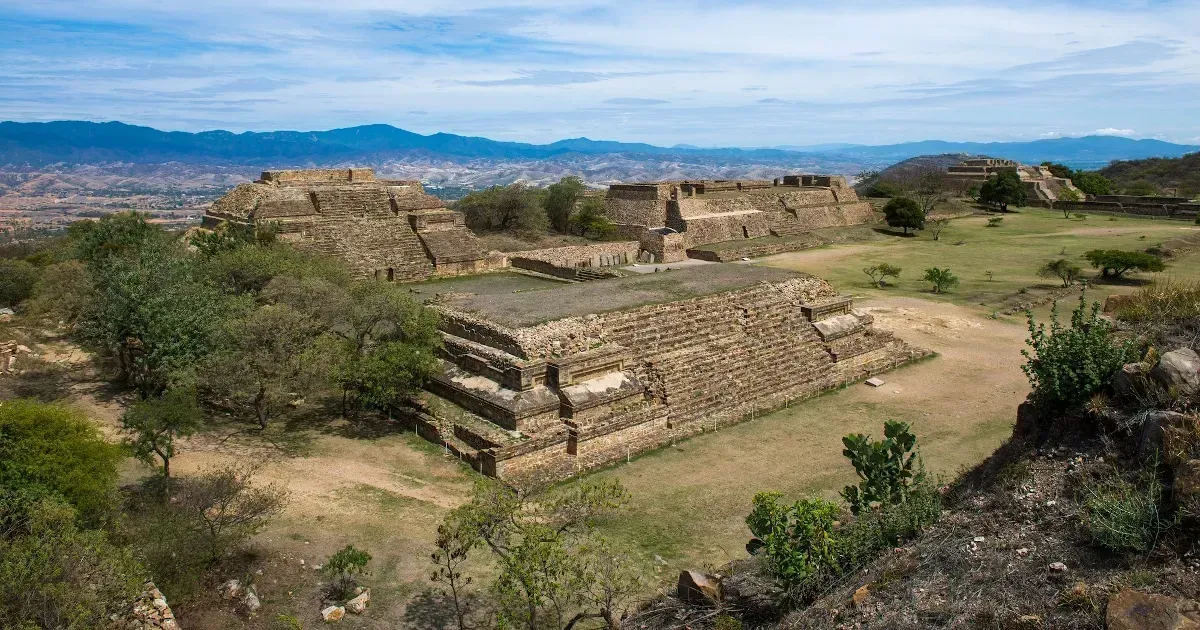
Monte Alban is one of the most important archaeological sites in all of Mexico. Perched on a flattened mountaintop just 10 kilometers from the city of Oaxaca, this ancient Zapotec capital offers sweeping 360-degree views of the surrounding valleys and a direct connection to over 1,300 years of Mesoamerican history. In 1987, UNESCO recognized Monte Albán as a World Heritage Site alongside the Historic Center of Oaxaca, cementing its place as a must-visit destination for anyone traveling to the region.
What is Monte Alban?
Monte Alban is the ancient capital of the Zapotec civilization, founded around 500 BCE on a flattened mountaintop overlooking the Valley of Oaxaca. It was the first major urban center in Mesoamerica, home to approximately 35,000 people at its peak, and served as the region’s political and ceremonial heart for over a millennium. Designated a UNESCO World Heritage Site in 1987, it remains one of the most significant archaeological sites in the Americas.
Whether you are a history enthusiast or a first-time visitor to Oaxaca, this guide covers everything you need to know: the site’s fascinating history, what to see when you arrive, and all the practical details for planning your visit.
History of Monte Albán
Founding and Early Growth (500 BCE - 200 CE)
Monte Albán was founded around 500 BCE atop a mountain overlooking the extensive Valley of Oaxaca. The identity of its very first inhabitants remains a subject of scholarly debate, but it is clear that the Zapotec civilization shaped the city into the powerful capital it became. The early settlers flattened the mountaintop — an extraordinary feat of engineering — and began constructing the ceremonial center that would dominate the region for centuries.
The Golden Age (200 - 650 CE)
At its peak, Monte Albán was the first major urban complex in Mesoamerica and home to approximately 35,000 inhabitants. The population mainly settled on the mountainsides and sustained themselves through agriculture. As a politically and economically influential center, Monte Albán controlled the destinies of the ancestral towns throughout the territory now known as Oaxaca. Its inhabitants built monumental structures, plazas, and terraces, efficiently exploiting the mountainous terrain. The city also served as a place of deep cultural and religious significance, where important rituals and ceremonies took place.
Architectural evidence shows that Monte Albán’s residents maintained contact with other cultures of central Mexico, especially the powerful Teotihuacán civilization.
Decline and Mixtec Period (650 - 1521 CE)
Around 850 CE, Monte Albán began to decline as a political center. The Zapotec population gradually dispersed to other settlements in the valley. Later, the Mixtec civilization arrived and reused the site, most notably as a burial ground. Tomb 7, one of the most famous archaeological discoveries in Mexico, dates from this Mixtec period (14th century).
The Mystery of Its Name
The original name of Monte Albán is itself a fascinating puzzle. The Mexicas called it Ocelotépec, meaning “Jaguar Mountain.” In Zapotec, it translates as Dani Beedxe (“dani” for mountain and “beedxe” for jaguar), though some sources say the Zapotecs called it Dani Baán. The Mixtecs knew it as Yucucúi, meaning “green hill” in their language. As for the Spanish name “Monte Albán,” two theories persist: one says the land belonged to a Spaniard surnamed Montalván, while the other suggests the landscape reminded colonizers of the Albanian mountains in Italy.
What to See at Monte Albán
Monte Albán is a vast archaeological site and the largest ceremonial center of the Zapotec civilization. Here are the key structures to look for during your visit.
The Grand Plaza (Main Plaza)
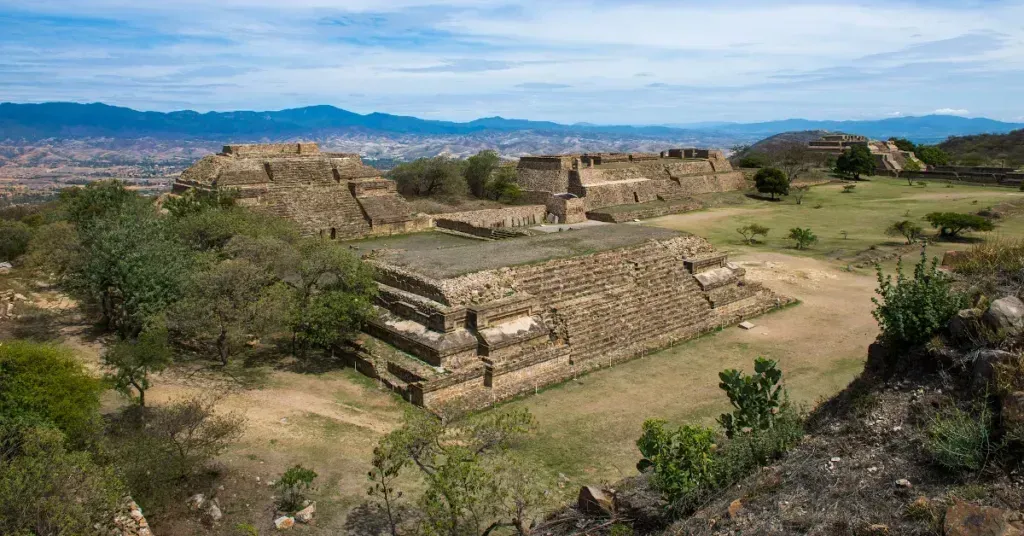
The Grand Plaza is the heart of the old ceremonial center, a massive open esplanade nearly 300 meters long. This was the sacred center of power from which Monte Albán governed the surrounding valleys. Surrounding the plaza are several temples, platforms, and residences once reserved for the ruling class. Standing in the middle of this open space, nearly 500 meters above the valley floor, is one of the most breathtaking experiences in Mexican archaeology.
The South Platform
The South Platform is the tallest structure at Monte Albán, rising 40 meters high. This two-body construction is easily identifiable and offers the best panoramic views of the entire site. Along its walls, you can find trails decorated with different Zapotec glyphs. Climbing to the top is well worth the effort for the views alone.
The Ball Court
The Ball Court (Juego de Pelota) is where the traditional Mesoamerican ball game was played under the supervision of priests or rulers for ceremonial purposes. The game held deep ritual significance across Mesoamerica, and Monte Albán’s court is one of the best-preserved examples in Oaxaca. Near the Ball Court sits Tomb 105, alongside a smaller, similar structure.
The Building of the Danzantes (Dancers)
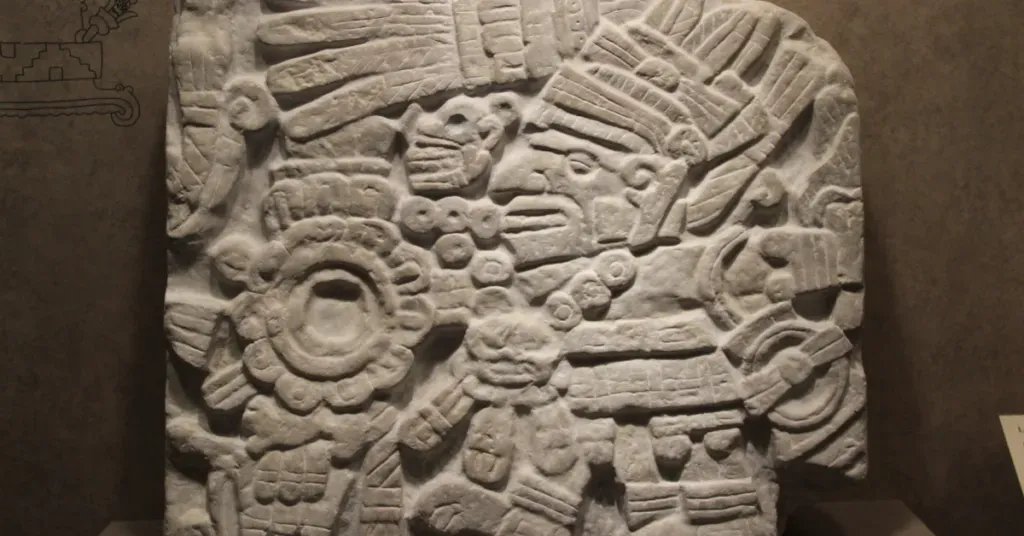
One of the oldest structures at Monte Albán, the Building of the Danzantes features carved stone slabs depicting human figures in contorted positions. Once thought to represent dancers, scholars now believe these carvings portray captured enemies or sacrificial victims, serving as a display of the city’s military might. The slabs also include numerical glyphs and calendar symbols, making this building a key record of early Zapotec writing and astronomical knowledge.
Building P (The Observatory)
Building P stands in the plaza and is believed to have served as an astronomical observatory. From this structure, ancient Zapotec astronomers tracked celestial movements, a practice closely tied to their calendar system and agricultural planning.
The Palace
The Palace is a residential complex featuring 13 rooms, believed to have housed high-ranking officials or priests. Its layout provides insight into the social hierarchy and daily life of Monte Albán’s elite.
Tomb 7
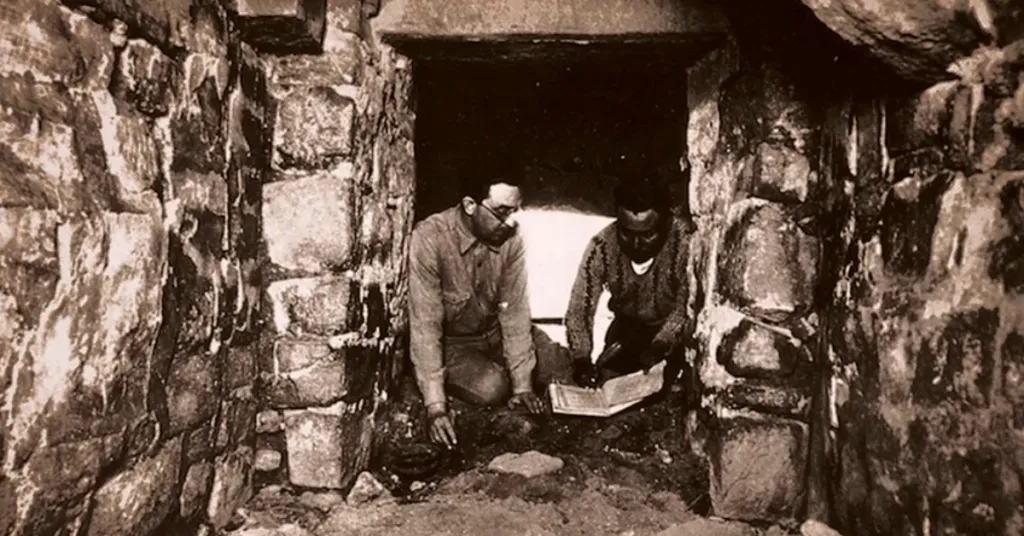
In 1932, Mexican archaeologist Alfonso Caso made a historic discovery by unearthing Tomb 7 — an intact Mixtec burial dating to the 14th century. It contained the largest collection of Mesoamerican objects found up to that time, including a skull adorned with turquoise and over 200 pieces carved in gold. This discovery remains one of the greatest milestones in Mexican archaeology. The original treasures from Tomb 7 are now displayed at the Museum of Cultures at Santo Domingo Church in Oaxaca city.
Tombs 103 and 104
These additional tombs feature painted murals and carved facades that provide further insight into Zapotec burial customs and artistic traditions.
Practical Information
Hours and Admission
- Hours: 9:00 AM - 5:00 PM, open daily (including weekends and most holidays)
- Admission:
$90 MXN ($5 USD) - Free admission on Sundays for Mexican nationals
How to Get There
- By bus: Shared shuttle buses depart regularly from Hotel Rivera del Ángel (Calle Mina 518, Centro) in Oaxaca city. The ride takes about 20 minutes and costs around $70-80 MXN round trip
- By taxi: A taxi from Oaxaca’s center costs approximately $100-150 MXN one way. Agree on the price before departing
- By tour: Many local agencies offer guided tours that include transportation, a guide, and sometimes a stop at nearby artisan villages
Best Time to Visit
- Early morning (arrive at opening, 9:00 AM) is ideal to avoid the midday heat and the largest tour groups
- Dry season (November through April) offers the clearest skies and most comfortable temperatures
- Weekdays tend to be less crowded than weekends
What to Bring
- Sunscreen and a hat — there is almost no shade on the site
- Plenty of water (at least 1 liter per person)
- Comfortable walking shoes with good grip
- A camera — the views are spectacular
- Light layers in case of wind at the summit
Time Needed
Plan for 2 to 3 hours minimum to explore the main structures and enjoy the views. If you want to visit the on-site museum and read all the informational plaques, allow 3 to 4 hours.
Tips for Your Visit
- Hire a guide at the entrance. Local guides are available at the ticket booth and can bring the ruins to life with stories and context that signs alone cannot provide. Expect to pay around $500-800 MXN for a private group tour.
- Start with the Grand Plaza and South Platform while you have the most energy. Save the peripheral tombs and museum for later.
- Bring your own snacks and water. There are a few vendors near the entrance, but options inside the site are very limited.
- Wear sturdy shoes. The terrain is uneven, and you will be climbing steep stone steps.
- Respect the site. Do not climb on structures that are roped off, and do not remove any stones or artifacts.
- Visit the on-site museum near the parking area. It is small but provides helpful context with artifacts and maps of the site’s layout.
- Combine your visit with a stop at the Santo Domingo Museum of Cultures in Oaxaca city to see the Tomb 7 gold treasures in person.
Monte Albán vs Mitla: Which Should You Visit?
Both sites are extraordinary, and ideally you should visit both. Here is how they compare:
| Monte Albán | Mitla | |
|---|---|---|
| Type | Hilltop ceremonial capital | Valley-floor religious center |
| Known for | Grand Plaza, panoramic views, Tomb 7 | Intricate geometric stone mosaics |
| Civilization | Zapotec (primarily) | Zapotec and Mixtec |
| Best for | Monumental architecture, sweeping views | Detailed stone artistry, textile shopping |
| Distance from Oaxaca | 10 km (20 min) | 46 km (1 hour) |
| Time needed | 2-3 hours | 1-2 hours |
Monte Albán impresses with its sheer scale and hilltop setting. Mitla captivates with the finest geometric stone mosaic work in all of Mesoamerica. If you only have time for one, Monte Albán is the more iconic and expansive experience.
UNESCO World Heritage Status
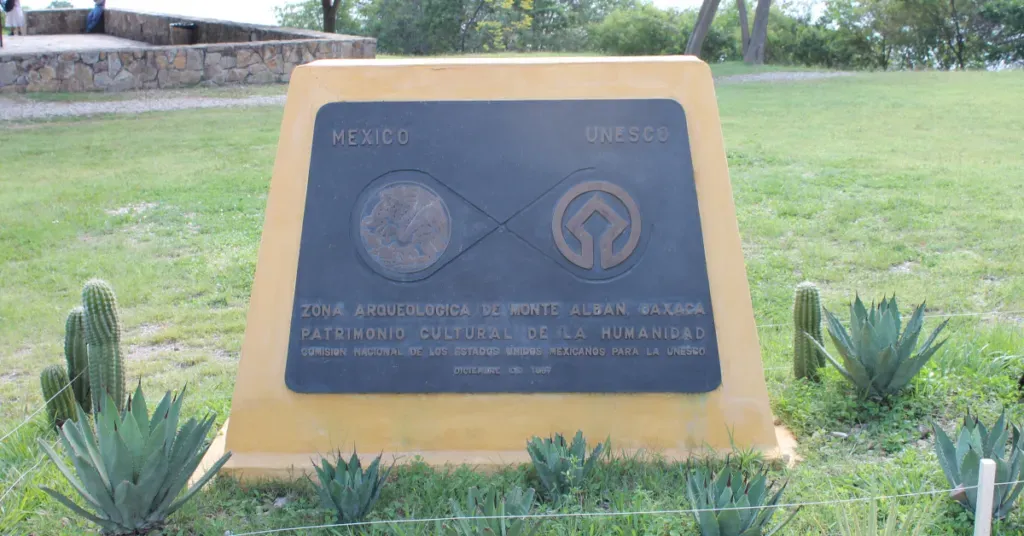
In 1987, Monte Alban received the prestigious UNESCO World Heritage designation, jointly awarded with the Historic Center of Oaxaca. For a detailed guide on visiting the site, see our Monte Alban visitor guide. You can combine Monte Alban with a visit to the best day trips from Oaxaca City or explore the complete Oaxaca museums guide to see Tomb 7 artifacts. This recognition highlights the extraordinary historical and cultural importance of the site as an invaluable legacy of the Zapotec civilization and a window into life in ancient Mesoamerica. The combination of Monte Albán’s archaeological wonders and Oaxaca’s colonial center creates a complete and enriching experience for visitors.
Frequently Asked Questions
How long does it take to visit Monte Albán?
Most visitors spend 2 to 3 hours exploring the site. If you hire a guide and visit the on-site museum, plan for 3 to 4 hours. The site closes at 5:00 PM, so arrive no later than 2:00 PM for a complete visit.
Is Monte Albán worth visiting?
Absolutely. Monte Albán is one of the most significant archaeological sites in the Americas. The combination of monumental Zapotec architecture, panoramic valley views, and over 2,500 years of history makes it an unforgettable experience. It is consistently rated as the top attraction in Oaxaca.
Can I visit Monte Albán on my own, or do I need a tour?
You can visit independently — just take a shuttle bus from Hotel Rivera del Ángel or a taxi. However, hiring a guide at the entrance is highly recommended, as the site has limited signage and a knowledgeable guide will significantly enhance your understanding of the ruins.
Is Monte Albán accessible for people with mobility issues?
The site involves significant walking over uneven terrain and steep stairs. The Grand Plaza is relatively flat once you reach it, but getting there requires climbing. It is not fully wheelchair accessible. Visitors with limited mobility should take their time and may want to focus on the main plaza area.
What is the best time of year to visit Monte Albán?
The dry season from November through April offers the best weather — clear skies, comfortable temperatures, and no risk of afternoon rain. The summer months (June-September) can bring afternoon showers, though mornings are usually clear. Early morning visits are best year-round to avoid heat and crowds.