
Oaxacan Alebrijes: Origin, Meaning, How They're Made & Where to Buy
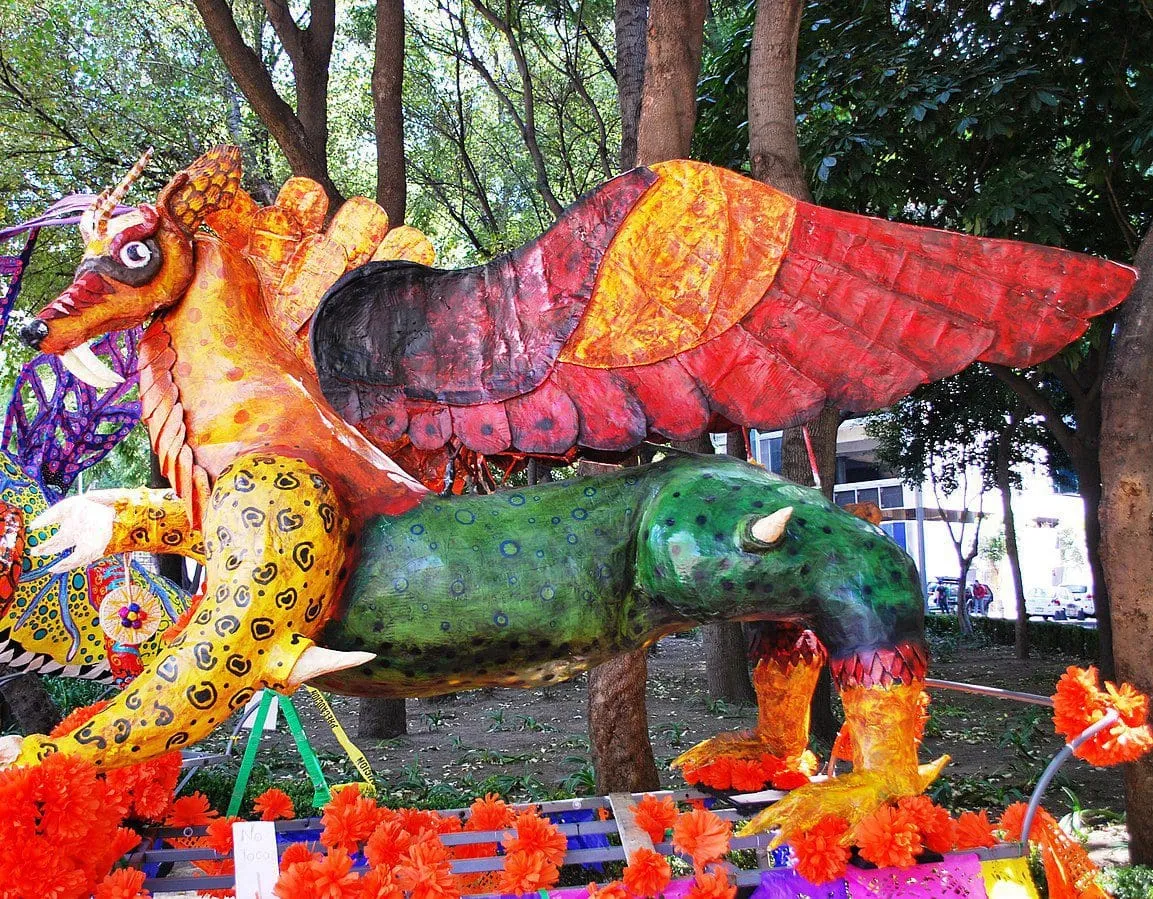
Walk into any craft market in Oaxaca and you will spot them immediately: fantastical creatures bristling with color, part jaguar, part eagle, part something that exists only in the artist’s imagination. These are alebrijes, hand-carved wooden sculptures that have become one of Mexico’s most recognized art forms and one of the best souvenirs you can bring home from Oaxaca.
In this guide we cover everything a visitor needs to know — the origin story, how alebrijes are made, where to find the best workshops, what they mean, and how to make sure you are buying an authentic piece.
What Are Alebrijes?
Alebrijes are brightly painted sculptures of imaginary creatures. Each figure combines features from different real and mythological animals — a lizard body with butterfly wings, a jaguar head on a serpent, a dragon covered in flowers. No two are alike.
In Oaxaca, alebrijes are carved from copal wood (Bursera glabrifolia), a soft, aromatic tree native to the region’s dry valleys. They range from thumbnail-sized key-chain trinkets to museum-quality pieces that take months to complete. The finest examples are collected as art around the world.
The Origin Story: Pedro Linares Lopez and a Feverish Dream (1936)
The word “alebrije” traces back to one man: Pedro Linares Lopez, a cartonero (papier-mache craftsman) born in 1906 in Mexico City.
In 1936, Linares fell gravely ill and slipped into a feverish sleep so deep that his family feared he had died. In that liminal state he dreamed he was wandering through a strange forest filled with impossible creatures — donkeys with butterfly wings, roosters with bull horns, lions with eagle heads. Every creature repeated the same mysterious word: “alebrije.”
When Linares recovered, he began recreating these dream beings using the cartoneria technique he already knew — building them from paper, cardboard, and paste, then painting them in explosive colors. The figures captured the attention of artists and collectors, including the legendary muralist Diego Rivera, who commissioned pieces and helped bring alebrijes to national recognition.
In 1990, Pedro Linares received Mexico’s prestigious National Prize for Sciences and Arts for his contribution to popular art. He passed away in 1992 at the age of 82, but the art form he started has only grown since.
How Alebrijes Came to Oaxaca: Manuel Jimenez and Copal Wood
While Linares created alebrijes from cardboard in Mexico City, the art form found its most celebrated home in the valleys of Oaxaca, thanks largely to Manuel Jimenez de Arrazola.
Jimenez, a farmer and self-taught carver from the village of San Antonio Arrazola, had been carving animal figures from copal wood since the 1950s. When the alebrije concept reached Oaxaca, local carvers like Jimenez and Epifanio Fuentes in San Martin Tilcajete adapted the idea to their own medium, replacing cardboard with hand-carved wood.
The result was something entirely new: three-dimensional wooden sculptures that combined the fantastical imagination of Linares’s dream creatures with Oaxaca’s deep tradition of woodworking, indigenous symbolism, and bold decorative painting. Today, when most people think of alebrijes, they picture the Oaxacan copal-wood version.
How Alebrijes Are Made: The Carving and Painting Process
Creating an alebrije is a labor-intensive process that can take anywhere from a few days to several months. Here is how it works, step by step:
1. Harvesting the Copal Wood
Artisans gather branches from the copal tree during the rainy season (June through September), when the wood is moist and easier to carve. Many families cultivate their own copal groves to ensure a sustainable supply. The wood has a distinctive fragrance — copal resin has been used as incense in Mesoamerican ceremonies for centuries.
2. Rough Carving
While the wood is still green and pliable, the carver uses machetes and knives to shape the basic form of the creature. This is where the artisan’s imagination takes center stage — there is no mold or template. Each piece is conceived freehand.
3. Drying
The rough-carved figure is left to dry, typically in the sun, for days or weeks. This step is critical: if the wood dries too quickly, it cracks. Some carvers bury pieces in sand to control the drying rate.
4. Fine Detailing
Once dry, the piece is refined with smaller knives, chisels, and sandpaper. The carver adds textures — scales, feathers, fur — and assembles multi-part figures by joining ears, wings, tails, and horns with wooden pegs or glue.
5. Painting
This is often the most time-consuming stage. The figure is coated in a white base layer, then painted by hand — usually by a different family member who specializes in design. Using fine brushes and acrylic paints, the painter applies intricate patterns: Zapotec geometric motifs, flowers, dots, spirals, and symbols drawn from nature and indigenous cosmology.
A single complex piece can require over 100 hours of painting alone.
The Artisan Villages: San Martin Tilcajete and San Antonio Arrazola
Two small villages in the Valles Centrales of Oaxaca are the heartland of alebrije production. Both are easy day trips from Oaxaca City.
San Martin Tilcajete
Located about 23 km south of Oaxaca City, Tilcajete is home to some of the most acclaimed alebrije workshops in the world. Families like the Fuentes, Santiago, and Hernandez families have been carving for generations.
What to expect: You can walk into family workshops, watch artisans carve and paint in real time, and buy directly from the makers. Pieces here tend to be more elaborately painted and command higher prices. The village hosts an annual alebrije festival, usually in December.
San Antonio Arrazola
About 12 km southwest of Oaxaca City, Arrazola is the village where Manuel Jimenez first carved copal-wood figures. It is smaller and more laid-back than Tilcajete.
What to expect: Workshop visits are informal and welcoming. You will find a wide range of styles and price points. Arrazola is particularly good for finding pieces at more accessible prices.
Getting there: Both villages can be reached by colectivo (shared taxi) from Oaxaca’s Central de Abastos market, by rental car, or through organized craft tours that typically combine both villages with other artisan communities.
Spiritual and Cultural Meaning
Alebrijes carry layers of meaning that go well beyond their visual appeal.
Connection to the Nahual Tradition
In Zapotec and Mixtec cultures, every person is believed to be born with a nahual — a spirit animal that accompanies and protects them throughout life. Many Oaxacans see alebrijes as representations of these nahuales. Owning an alebrije is not just decorative; it is a way of connecting with your spiritual guardian.
Color Symbolism
Nothing in an alebrije’s design is random. Each color carries traditional meaning:
- Green — nature, empathy, healing
- Pink — love, tenderness
- Orange — release of negative emotions, energy
- Yellow — joy, expression, abundance
- Blue — tranquility, wisdom
- Brown — connection to Mother Earth and the animal world
- Red — passion, strength
- Purple — royalty, spirituality
Animal Symbolism
The animals combined in an alebrije are also chosen with intention. A jaguar represents power and strength. Butterfly wings suggest transformation and freedom. Eagle features invoke vision and courage. The fusion of multiple animals in a single figure symbolizes the connection between the earthly and spiritual worlds — a concept central to many indigenous cultures of Mexico.
Alebrijes and the Day of the Dead
Although alebrijes are not a traditional element of Dia de los Muertos, the two have become intertwined in modern celebrations. Giant alebrije figures now parade through Mexico City streets during the annual Monumental Alebrijes competition, and the 2017 Pixar film Coco cemented the association by featuring a spirit alebrije named Pepita that guides souls between the worlds of the living and the dead.
Where to Buy Authentic Alebrijes in Oaxaca
At the Source: Village Workshops
The best way to buy is directly from artisans in San Martin Tilcajete or San Antonio Arrazola. You get fair prices, you support the families directly, and you can watch your piece being made.
In Oaxaca City
- Mercado de Artesanias (Calle J.P. Garcia) — The main craft market, with dozens of stalls selling alebrijes at negotiable prices. For more on what else to bring home, see our Oaxaca shopping guide.
- MARO (Mujeres Artesanas de las Regiones de Oaxaca) — A cooperative-run shop on Calle 5 de Mayo that ensures fair wages for artisans.
- La Casa de las Artesanias — Government-run shop with quality-verified pieces.
- Gallery shops along Calle Alcala — Higher-end pieces, often from named artists, at gallery prices.
Online
Some established workshops sell through their own websites or platforms like Etsy. Look for sellers who identify the specific artisan and village of origin.
How to Spot Authentic Alebrijes vs. Mass-Produced Fakes
The popularity of alebrijes has unfortunately led to a flood of factory-made imitations, many produced in China or in Mexican workshops using assembly-line methods. Here is how to tell the difference:
| Feature | Authentic Alebrije | Mass-Produced Copy |
|---|---|---|
| Material | Copal wood (light, aromatic) | Resin, plastic, or generic soft wood |
| Carving | Slight asymmetries, tool marks, organic feel | Perfectly uniform, no tool marks |
| Painting | Intricate, hand-painted patterns (look for tiny brush strokes) | Uniform colors, screen-printed or stenciled patterns |
| Weight | Lightweight (copal is a light wood) | Heavier (resin) or too light (plastic) |
| Smell | Faint copal fragrance, especially if you scratch the base | No natural scent |
| Price | Reflects hours of labor (see below) | Suspiciously cheap |
| Provenance | Seller can name the artisan and village | Vague or no origin information |
Tip: Always ask who made the piece and where. Authentic sellers are proud to share the artisan’s name.
Price Ranges: What to Expect
Alebrije prices vary enormously based on size, detail, and the reputation of the artisan.
- Small figures (5-10 cm): $5-$20 USD — Great as gifts or stocking stuffers. These are often simpler designs carved by apprentices or newer artists.
- Medium figures (15-25 cm): $30-$150 USD — Good balance of artistry and affordability. Detailed painting, recognizable style.
- Large figures (30-50 cm): $150-$500 USD — Statement pieces with complex carving and elaborate paint work.
- Museum-quality / master artisan pieces: $500-$5,000+ USD — Works by renowned families (Fuentes, Santiago, Angeles), often exhibited in galleries and museums. Investment-grade folk art.
Prices in the artisan villages are generally 20-40% lower than in Oaxaca City shops, and significantly less than in Mexico City or international galleries.
Alebrijes and the Oaxacan Economy
The creation and sale of alebrijes is a vital economic engine for the Valles Centrales communities. Hundreds of families in San Martin Tilcajete, San Antonio Arrazola, and surrounding villages depend on this craft for their livelihood. The demand generates employment, supports small family workshops, and drives cultural tourism to the region.
The craft also encourages environmental stewardship. Because copal wood is the essential raw material, artisan communities have a direct incentive to cultivate and protect copal groves rather than clear land for other uses — a model of sustainable development rooted in cultural tradition.
Festivals and Events
- Noche de Rabanos (Night of the Radishes) — December 23 in Oaxaca City. While focused on radish carving, alebrije artisans often participate.
- Guelaguetza — July in Oaxaca City. The state’s largest cultural festival, featuring crafts including alebrijes.
- Desfile de Alebrijes Monumentales — October in Mexico City. A parade of giant alebrije sculptures through the historic center.
- Village festivals in Tilcajete — Usually in December, with carving demonstrations and sales.
Frequently Asked Questions
What exactly is an alebrije?
An alebrije is a hand-carved and hand-painted wooden sculpture of an imaginary creature, typically combining features from multiple real and mythological animals. In Oaxaca, they are carved from copal wood and painted with intricate, colorful patterns. Each piece is unique — there are no molds or templates.
How long does it take to make an alebrije?
It depends on the size and complexity. A small, simple piece might take 2-3 days. A medium-sized piece with detailed painting typically requires 1-3 weeks. Museum-quality pieces by master artisans can take 2-6 months of combined carving and painting time.
Are alebrijes connected to the Day of the Dead?
Not traditionally — alebrijes originated from Pedro Linares’s dream in 1936, separate from Dia de los Muertos customs. However, the two have become culturally intertwined in modern celebrations, especially after the Pixar film Coco featured a spirit alebrije. Today, giant alebrije figures regularly appear in Day of the Dead parades in Mexico City.
Can I visit the workshops where alebrijes are made?
Yes, and you absolutely should. The villages of San Martin Tilcajete (23 km south of Oaxaca City) and San Antonio Arrazola (12 km southwest) welcome visitors to family workshops where you can watch the entire process — from raw copal wood to finished, painted sculpture. No appointment is usually needed, though some higher-profile workshops appreciate a heads-up.
How do I know if an alebrije is authentic?
Look for copal wood (light, aromatic), hand-painted details with visible brush strokes, slight asymmetries that show handwork, and ask the seller for the name of the artisan and village where it was made. Avoid pieces that are suspiciously cheap, perfectly uniform, or made from resin or plastic. See our detailed comparison table above.